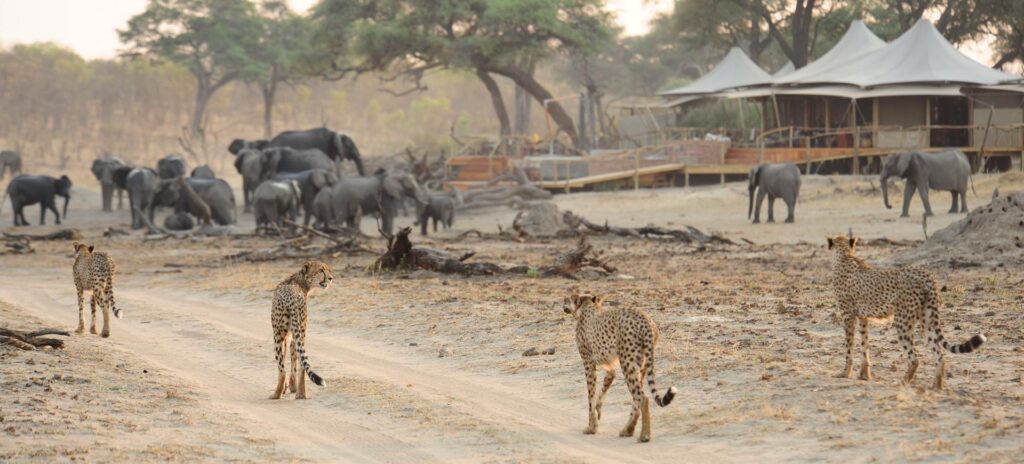
Hwange is the largest game reserve in Zimbabwe. The salt pans, acacia scrub and grassy plains support an abundance of game, but this has not always been so.
These sands have seen a lot of blood, from both man and beast. Consider the history: Hwange was an early African chief who was ousted by the invading Ndebele tribe and the lands were taken over to be used as a royal hunting ground.
When the white man came in the 19th century, they promptly set about claiming land and finishing off the remaining game. Then fate stepped in. As population pressures increased, the country’s animals were pushed further and further into the inhospitable western reaches on the Botswana border where Hwange lies, and the national park came about primarily by default.
It has been a park now for 70 years and has the densest concentration of wildlife in Africa with great herds of buffalo and elephant and all the “big five”.
Game viewing is made easier by the shallow pans threaded throughout the park. These natural salt-licks, brought to the surface by the excavation of ants, provide the elephants with their favourite mudholes. They ultimately become small ponds, some 20 or 30 metres around.
The park has numerous facilities including an airport, petrol stations, good roads and a range of accommodation options. No need to rough it here, unless you really want to.