The Park has been divided into two eco-zones by the road that has crossed across the park. The river basin of Mkata has the alluvial soil which support to the vegetation of the Savannah dotted with acacia, baobab, tamarind and some rare palm trees.
The road that crosses the park divides it into two areas with partially distinct environments. The alluvial plain of the river basin Mkata characterizes the area northwest. The vegetation of this area consists of Savannah dotted with acacia, baobab, tamarind and some rare palm. In this area, at the furthest from the road, there are spectacular rock formations of Rubeho and Uluguru: the mountains.
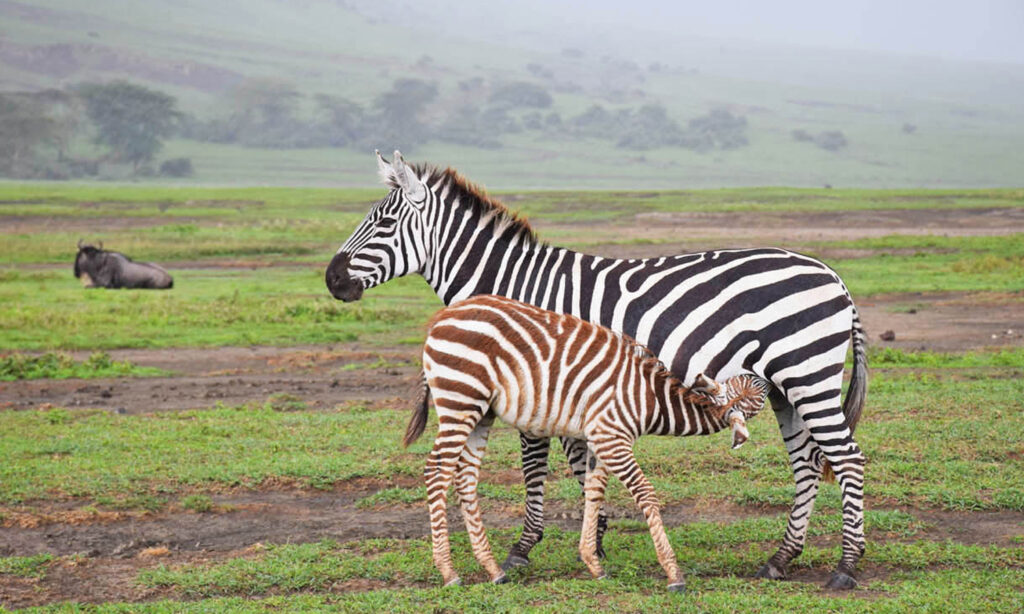
The park does not lag behind displaying the African games that are the main attraction of the African Safaris. Mikumi is most famous for the tree climbing lions those hang on the trees and amazingly sleep with the great balance. Except this, there are few places in Africa where you can find the tree climbing lions. Apart from this the park includes some of the other animals such as masai giraffe and the reticulated or Somali giraffe, elephants, zebras, impala, eland, kudu, black antelope, baboons, wildebeests and buffaloes. The two of the hippo infested pools in the north side of the park and 400 species of birds are some of the best features that attract the global attraction.